Determining your ideal equity allocation is the structural foundation of long-term wealth building. It dictates how much of your portfolio is exposed to the growth engine of the stock market versus the stability of fixed-income instruments.
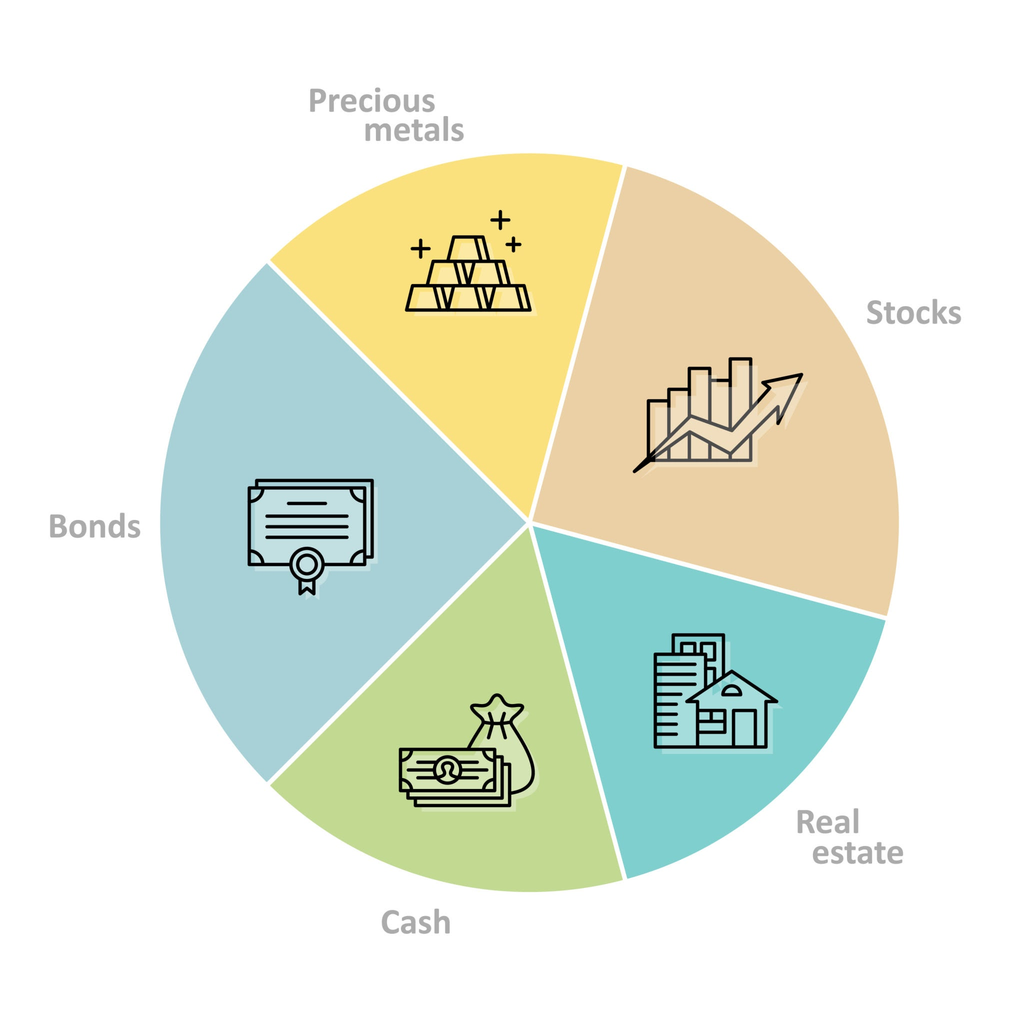
Asset allocation balances risk and growth.. Source: Kilroy79 / Getty Images
The Core Conflict: Inflation vs. Volatility
Your portfolio faces two primary enemies: Inflation (the silent erosion of purchasing power) and Volatility (the short-term fluctuation of market prices).
In India, historical retail inflation hovers around 6%. If your entire portfolio is parked in Fixed Deposits (FDs) yielding 7%, your post-tax real return is effectively zero or negative. Equity is the necessary antidote to inflation, historically delivering 11-14% over long periods via indices like the Nifty 50. However, equity requires paying the “toll” of psychological discomfort during market corrections.
Framework 1: Goal-Based Allocation (The Superior Method)
The most robust way to determine your equity allocation is not your age, but when you actually need to spend the money. Capital that you need in the short term cannot handle the volatility of equities.
| Time Until Goal | Ideal Equity Exposure | Primary Investment Vehicles |
|---|---|---|
| 0 – 3 Years | 0% | FDs, Liquid Mutual Funds, Arbitrage Funds |
| 3 – 7 Years | 30% – 50% | Balanced Advantage Funds, Aggressive Hybrid Funds |
| 7+ Years | 70% – 100% | Nifty 50 Index Funds, Flexi-Cap Funds, Direct Stocks |
If you are saving for a house downpayment required in 24 months, your equity allocation for that specific bucket should be strictly 0%. If you are investing for retirement 20 years away, that bucket can safely be 80-100% equity.
Framework 2: The “Rule of 120” (The Baseline Check)
The old rule of “100 minus your age” is outdated due to increasing life expectancies. The modern rule of thumb is 120 minus your age.
- Age 30: 120 – 30 = 90% Equity
- Age 50: 120 – 50 = 70% Equity
The limitation of this rule: It assumes everyone of the same age has the same financial responsibilities. A 30-year-old with heavy debt and dependents cannot afford the same equity exposure as a debt-free 30-year-old. Use this rule as a starting baseline, not an ironclad law.
The Psychological Anchor: Risk Capacity vs. Risk Tolerance
Understanding your equity number requires separating the math from the mind.
- Risk Capacity (The Math): How much you can afford to lose without altering your lifestyle. A dual-income household with a six-month emergency fund has high risk capacity.
- Risk Tolerance (The Mind): How you actually behave when your portfolio bleeds. This is governed by Loss Aversion—the psychological principle that the pain of losing ₹10,000 is twice as intense as the joy of gaining ₹10,000.
The Sleep-Well-At-Night (SWAN) Test: Look at your target equity allocation in absolute rupees, not just percentages. If you have a ₹50 Lakh portfolio with 80% equity (₹40 Lakh), ask yourself: If the market drops 30% tomorrow and my equity value falls by ₹12 Lakh, will I panic and sell? If the answer is yes, your equity allocation is too high, regardless of what the rules of thumb say.
The “Hidden Debt” Trap
When calculating their equity exposure, many Indian investors look only at their mutual fund apps. They fail to account for their mandatory debt investments, leading to a much more conservative portfolio than they realize.
If you earn a salary, a portion of it goes into the Employees’ Provident Fund (EPF). If you utilize Section 80C, you likely contribute to a Public Provident Fund (PPF). Both are 100% debt instruments.
To find your true asset allocation, you must aggregate everything:
- Total EPF + PPF + FDs = Your Total Debt
- Total Stocks + Equity Mutual Funds = Your Total Equity
Often, an investor who thinks they are 80% in equity realizes they are actually 40% in equity once their EPF corpus is factored in.
Wealth building is ultimately a behavioral exercise. The mathematically perfect equity allocation is useless if you abandon it during a market crash. The ideal equity percentage is the highest amount that outpaces inflation while still allowing you to stick to your SIPs when the market drops 20%. Find that number, automate your investments, and let compounding do the heavy lifting over the next decade.
Disclaimer: This article is intended for educational and informational purposes only. Personal growth is an ongoing journey, and results vary based on individual circumstances, consistent effort, and continuous learning.